Iron in Kerala well water: orange stains, and what a sediment filter can and can't fix
Orange buckets, yellow clothes and a metallic taste are common in Kerala well water. Here is why iron shows up, how to tell dissolved iron from rust particles, and what each fix really does.
fryingpan4 min read
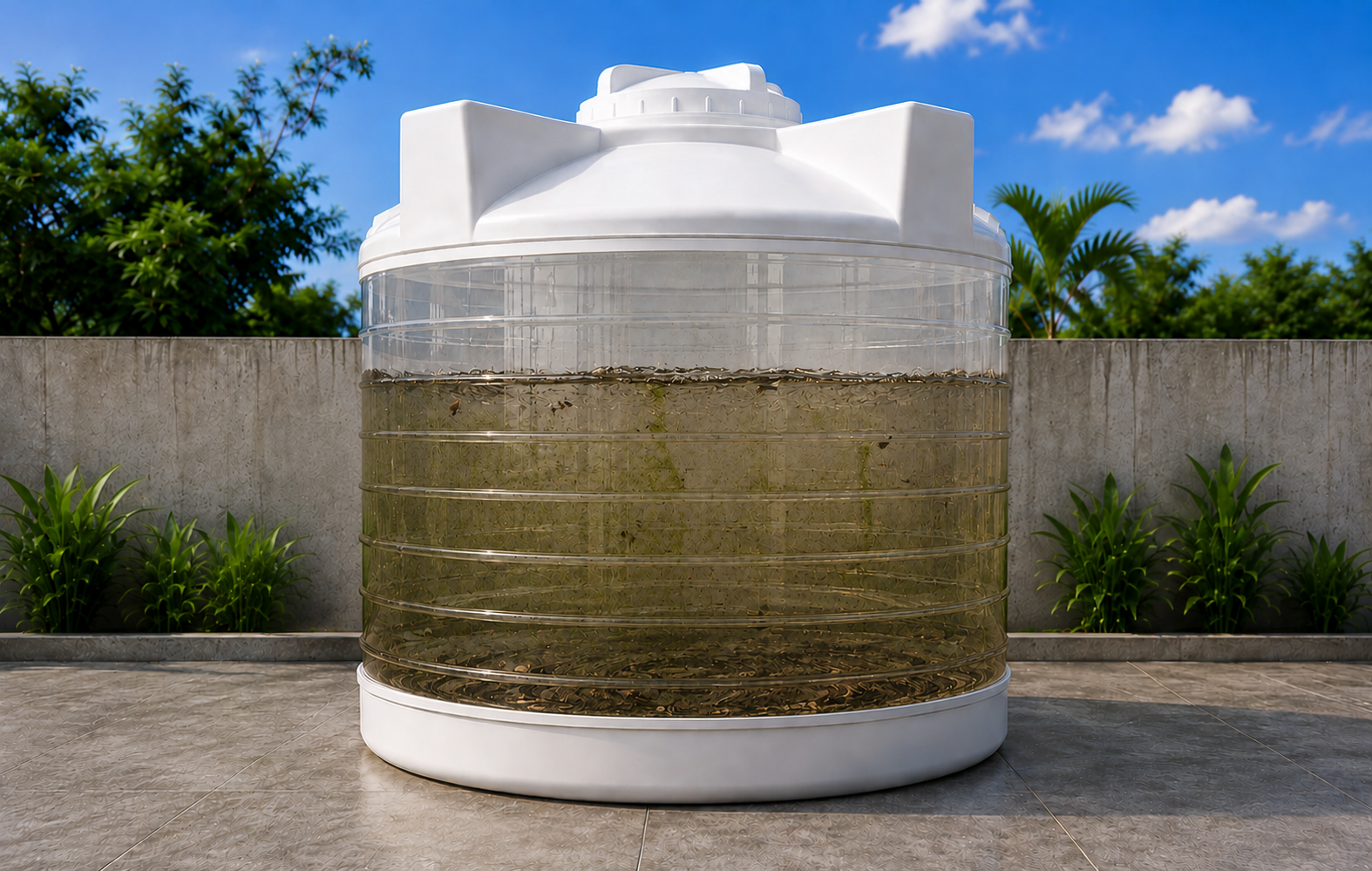
The water comes out of the tap looking clear. You fill a bucket, leave it for an hour, and there is an orange film on the surface and a rusty ring on the side. White towels slowly turn yellow. The bathroom tiles grow orange streaks no matter how often you scrub them.
Short answer: that is iron, and in Kerala it usually comes from the ground, not from your pipes. Some of it arrives as rust particles that a sediment filter can catch. Most of it arrives dissolved, and only turns orange after it meets air. A sediment filter alone will not remove dissolved iron.
Why so many Kerala wells have iron
Iron in groundwater is a known issue across the state. A water quality assessment of Kerala by the National Institute of Hydrology lists salinity, iron, fluoride, hardness and coliform bacteria as the main groundwater quality problems in the state (National Institute of Hydrology, comprehensive assessment of water quality in Kerala). The Central Ground Water Board's district reports for places such as Kollam and Kottayam also discuss iron in groundwater.
The rock explains a lot of it. Much of Kerala's midland belt sits on laterite, the reddish rock you see in house compound walls, and laterite is rich in iron oxides (Indian Institute of Science, Energy and Wetlands Research Group). Water that moves through iron-rich ground can pick some of it up.
Two kinds of iron, two different fixes
This is the part most people miss, and it decides which fix will work.
Rust particles (iron you can see)
- The water looks orange or brown as soon as it comes out.
- If you let a glass stand, orange or brown specks settle at the bottom.
- Common causes: old galvanised iron pipes, a rusting tank or tank fittings, and sediment that has already oxidised.
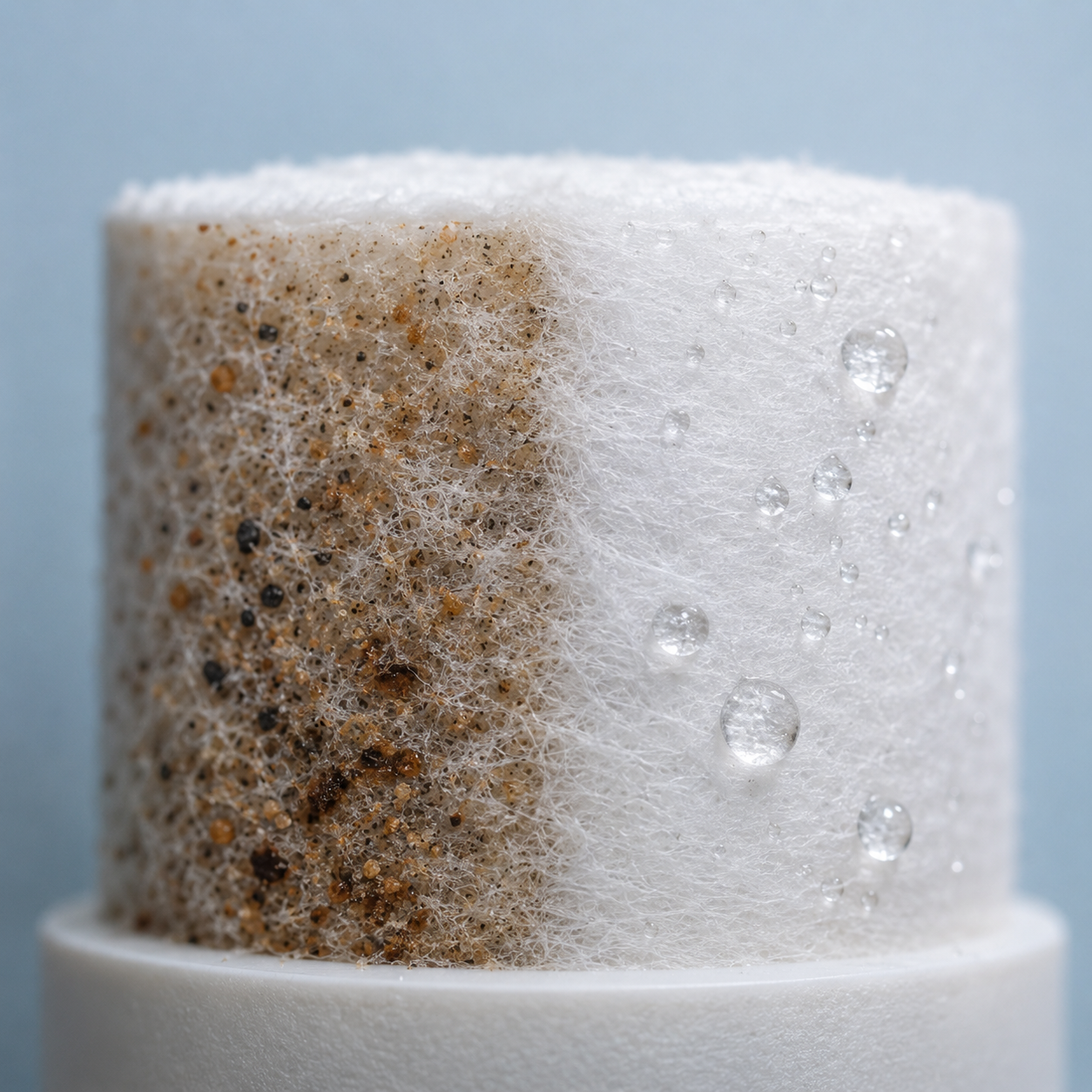
A sediment filter catches this. Particles larger than the filter's rating stay in the filter, which is why a used filter bag from a well with iron problems often comes out orange.
Dissolved iron (iron you can't see yet)
- The water looks clear when it comes out, then turns yellow or orange after standing for a while.
- Clothes, buckets and tiles stain slowly over weeks.
- The water may taste metallic.
This iron is dissolved, a bit like sugar in tea. No ordinary mesh can catch it, because there is no particle to catch. It only becomes a particle after it reacts with oxygen in the air, which is why the bucket turns orange later.
A 5-micron sediment filter will not remove dissolved iron. Anyone who tells you otherwise is overselling.
How to check which one you have
You need a clean glass and a little patience:
- Fill a clear glass straight from the tap.
- Look at it immediately. If it is already orange or cloudy, you have rust particles.
- Leave it uncovered for a few hours. If clear water turns yellow or orange and settles a film, you have dissolved iron.
Many Kerala homes have both. For an exact figure, get the water tested. Kerala Water Authority runs water testing labs, and your local panchayat or health inspector can point you to the nearest one.
What each fix actually does
| Problem | What works | What it does not do |
|---|---|---|
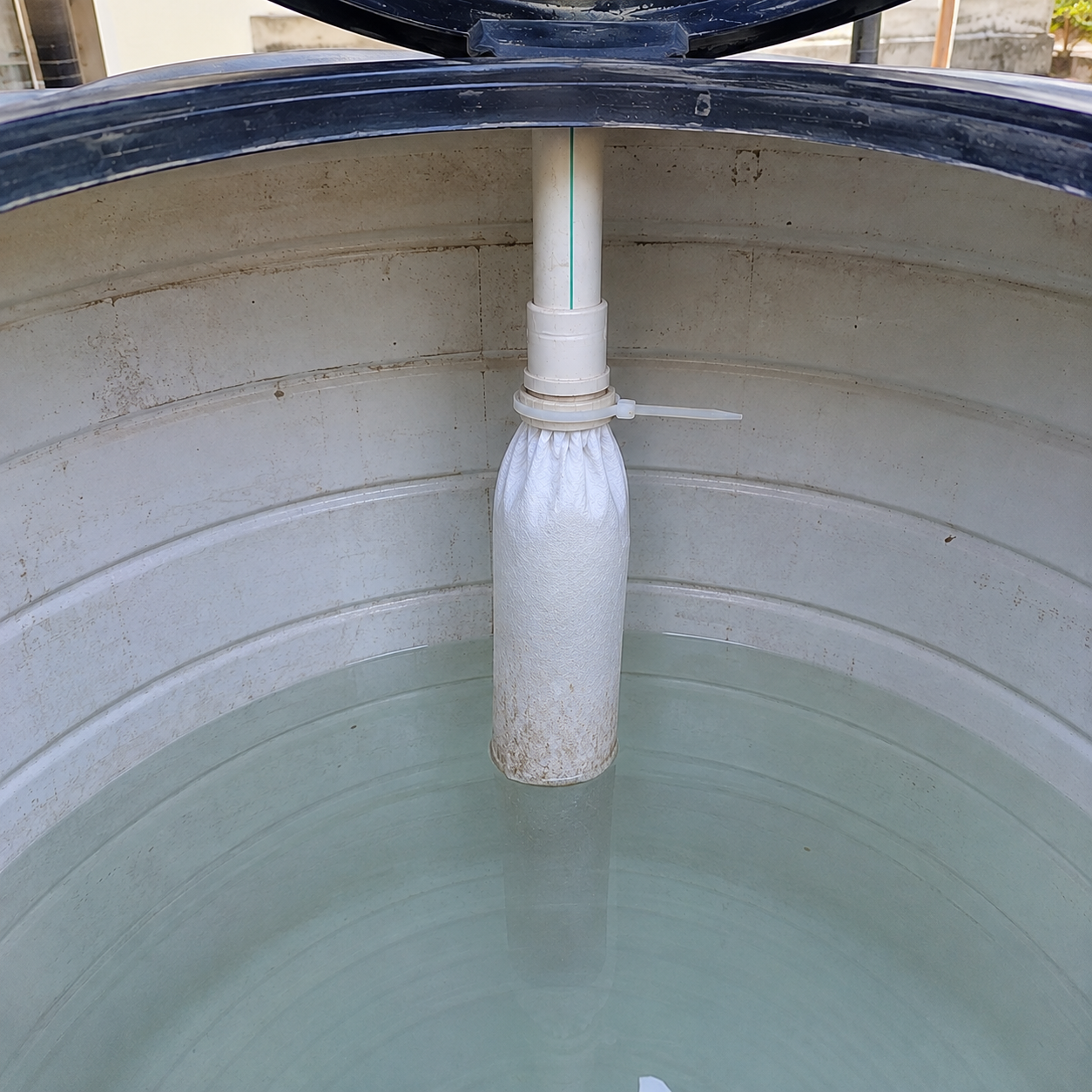
| Rust particles, sand, silt | Sediment filter (for example a 5-micron bag on the tank inlet) | Remove dissolved iron or germs |
| Dissolved iron | Iron removal filter (aeration plus filtration, or a dedicated iron removal media) | Replace a drinking water purifier |
| Germs | Chlorination, boiling, UV or RO for drinking | Remove sediment or iron stains |
For dissolved iron, the usual approach is aeration first, then filtration: expose the water to air so the iron turns into particles, then filter those particles out. Some homes do this with a dedicated iron removal plant before the tank. Talk to a local water treatment supplier about your test results before buying one.
Where a sediment filter still earns its place
Even if your main problem is dissolved iron, a sediment filter on the tank inlet helps:
- It catches the rust flakes and sand that do arrive as particles, so the tank floor stays cleaner.
- It catches iron that has already oxidised on its way up from the well.
- It protects whatever comes after it. Iron removal media and RO purifiers both clog faster when they have to deal with sand and silt as well.
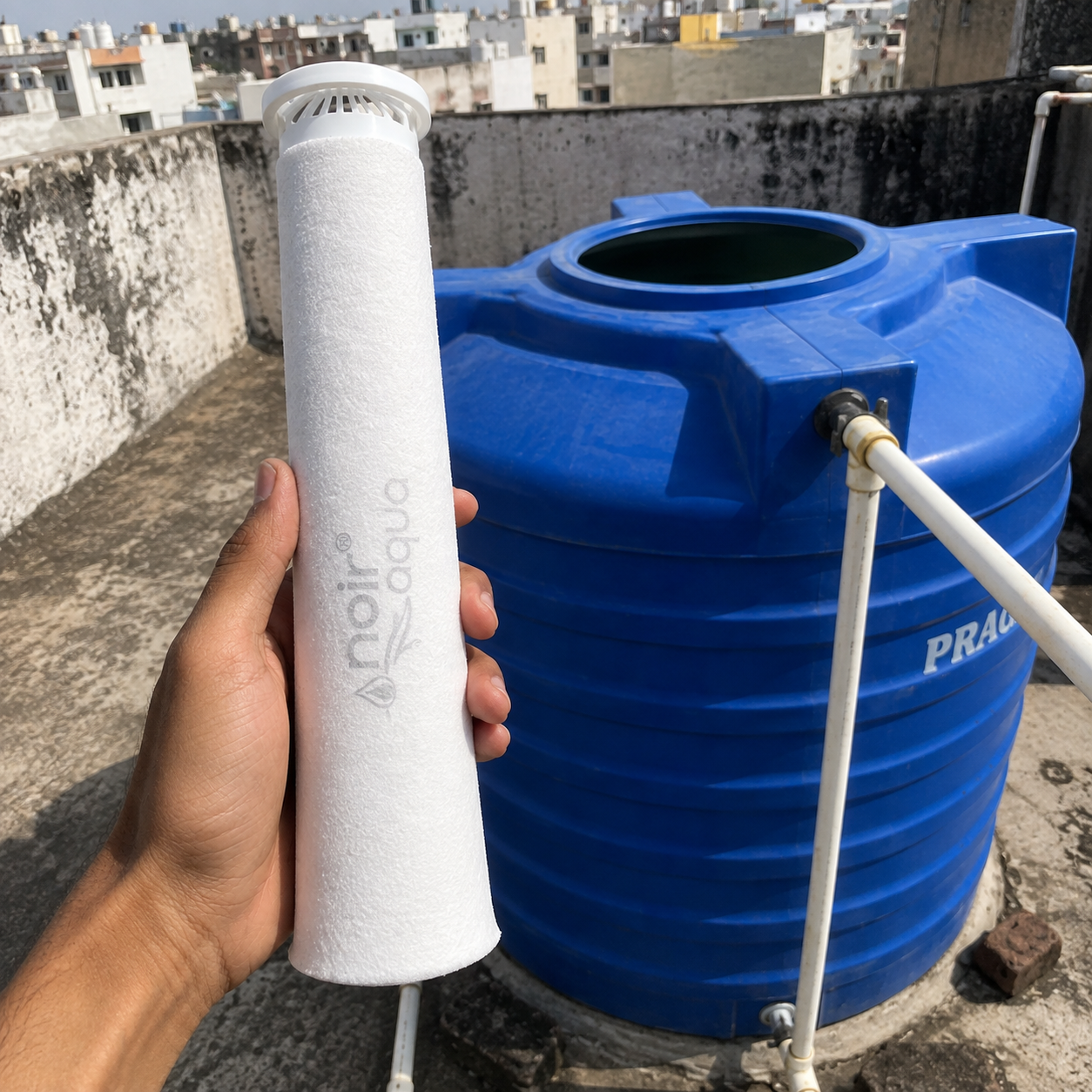
Our 5-micron tank filter bag does this job. It fits standard 20-inch Big Blue housings, and you rinse it out and reuse it instead of buying cartridges. If it turns orange within days, take that as a sign to get the water tested for dissolved iron too.
For the bigger monsoon picture, see why Kerala well water turns muddy in the monsoon, and for drinking water choices, sediment filter vs RO.