Kerala monsoon: why your well water turns muddy, and what actually helps
Every June the kinar water turns brown and the overhead tank fills with silt. Here is where that mud comes from in a Kerala house, and a simple way to stop it reaching your taps.
fryingpan5 min read
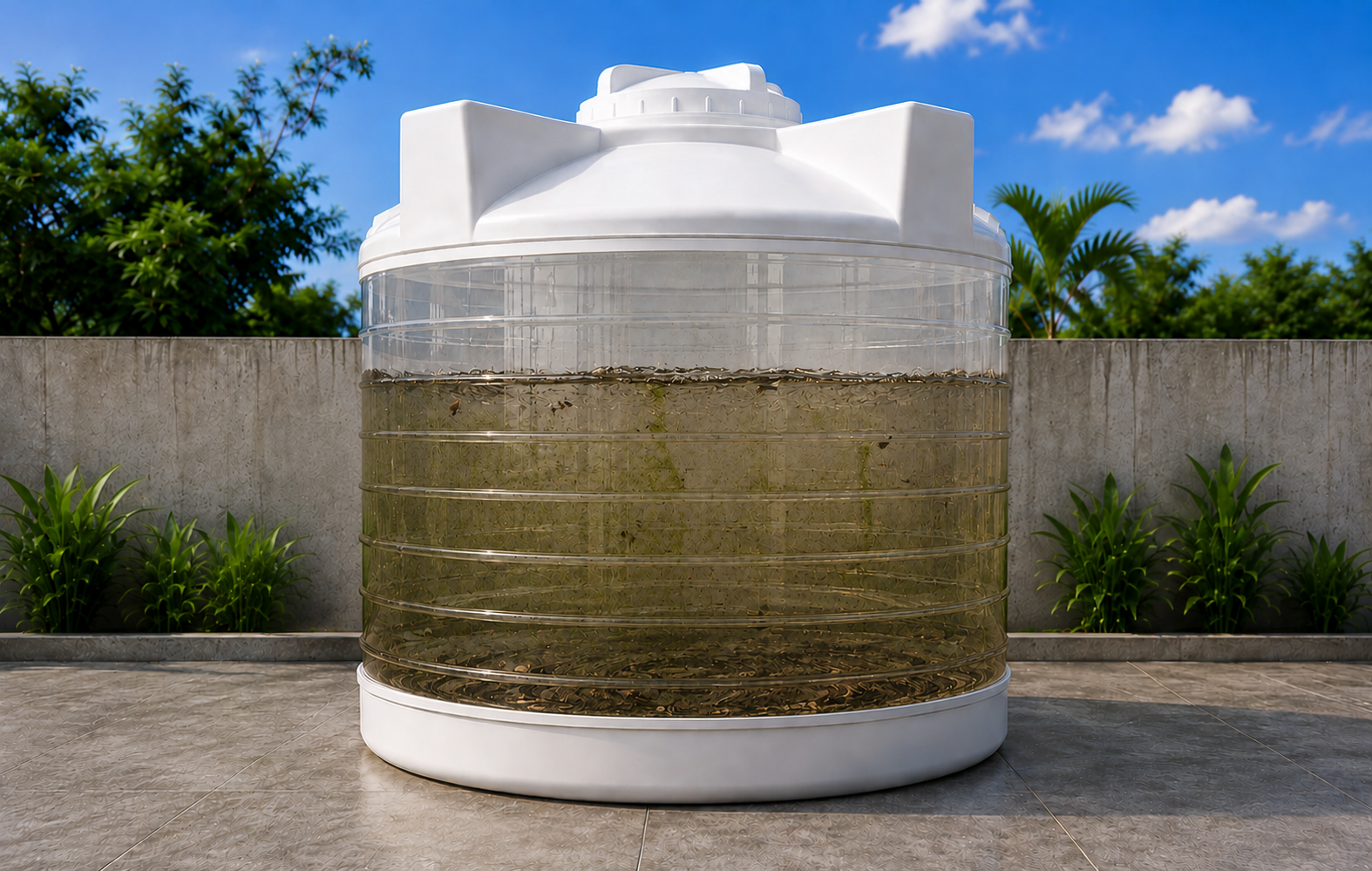
If you live in Kerala, you know the pattern. The first heavy spell of the southwest monsoon arrives, the well fills up fast, and within a day or two the water in the bucket has a brown tint. The overhead tank collects a layer of fine silt, the tap aerators start spitting grit, and white clothes come out of the washing machine a shade duller.
Short answer: most of that mud is fine sediment carried into the well by rainwater and then pumped up into your overhead tank. A sediment filter on the tank inlet catches it before it settles in the tank. It does not make the water safe to drink, and it does not remove dissolved iron or germs, but it does stop the grit and the brown layer.
Why Kerala homes get this every year
Kerala leans on wells far more than most of India. In Thrissur district, for example, the 2001 census counted about 4.5 lakh open wells for roughly 6 lakh households, and 71% of the district's people depended on open wells for drinking water (India Water Portal, on the Mazhapolima well recharge programme). Older national survey data puts wells as the main drinking water source for 85.1% of rural Kerala households (NSSO 54th round, as cited in a Lok Sabha answer).
A typical set-up looks like this:
- An open well (kinar) in the compound.
- A motor that pumps water up to a tank on the roof.
- Gravity feeding every tap in the house from that tank.
That chain is exactly why monsoon mud travels so far. Whatever is suspended in the well water when the motor runs gets lifted straight into the tank.
Where the mud comes from
Runoff into the well
When the rain is heavy, surface water carries soil with it. If the well's parapet is low, the apron around it is cracked, or the compound slopes towards it, that muddy water finds its way in. Even a well with a good parapet can see silt seep in through the soil around it after days of continuous rain.
Sediment stirred up inside the well
The water level in a Kerala well can rise sharply during the monsoon. Fast inflow stirs up the fine material that has settled at the bottom over the dry months. If the foot valve sits close to the floor of the well, the motor pulls that cloudy water first.
Sediment that was already in your tank
Your overhead tank has its own settled layer. A sudden refill after the motor has been off for a while can churn it up, which is why the water sometimes looks worst right after the motor runs. We cover this in more detail in why tank water turns muddy after it rains.
What actually helps
Look after the well first
These cost little and stop mud at the source:
- Raise and seal the parapet. A parapet that stands clear of the ground keeps surface runoff out.
- Fix the apron. A cracked concrete platform around the well lets dirty water drain straight in.
- Cover the well. A net or cover keeps leaves and debris out, which also reduces the organic sludge at the bottom.
- Check the foot valve height. Keeping it a little above the floor of the well means the motor draws clearer water.
If your well was flooded, treat it before using the water. The Kerala Health Department issues well chlorination guidance every monsoon, and your local health inspector or PHC can tell you the right dose for your well.
Catch the sediment before it reaches the tank
Even a well-kept well will send some silt up during heavy rain. The simplest fix is to stop it at the point where water enters the overhead tank.
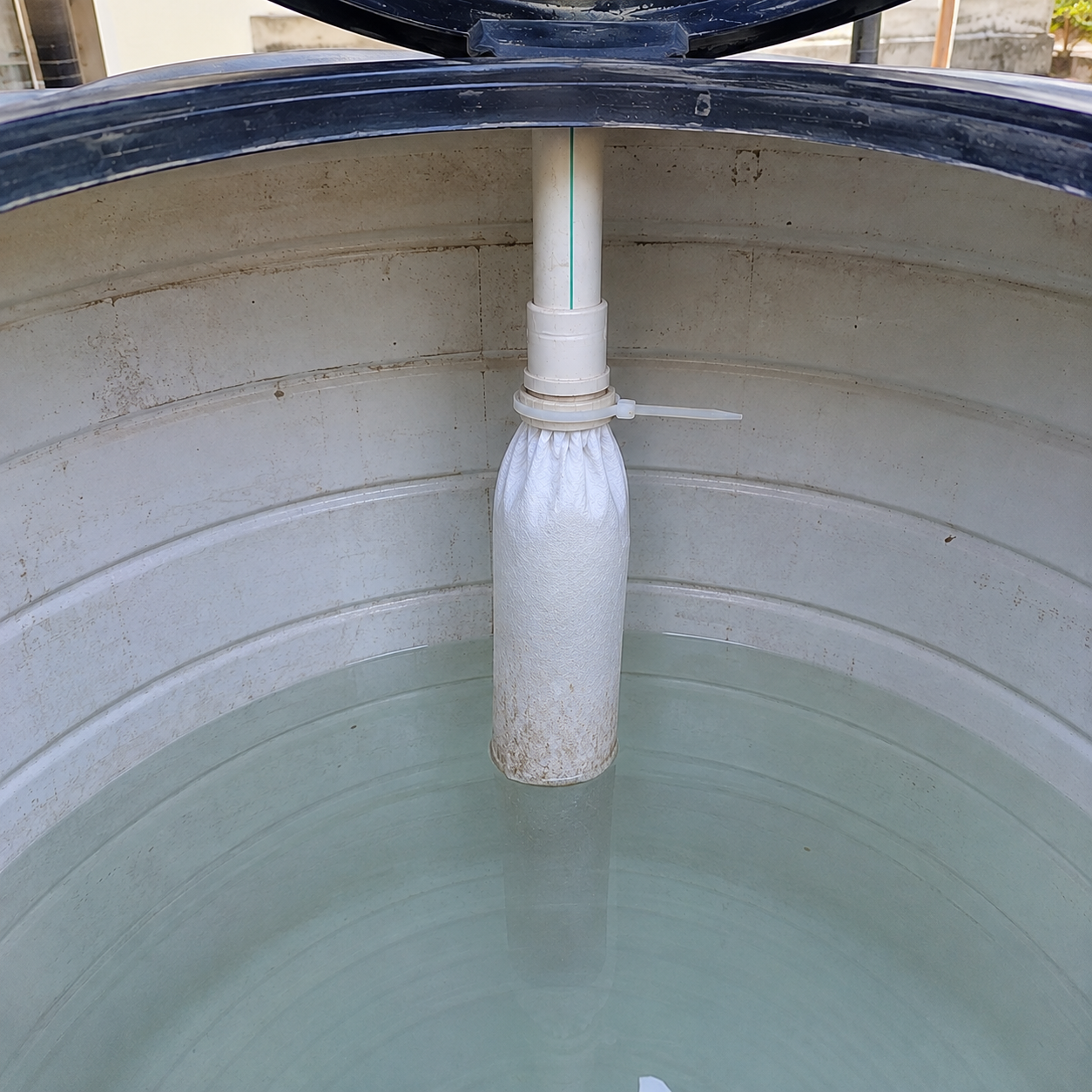
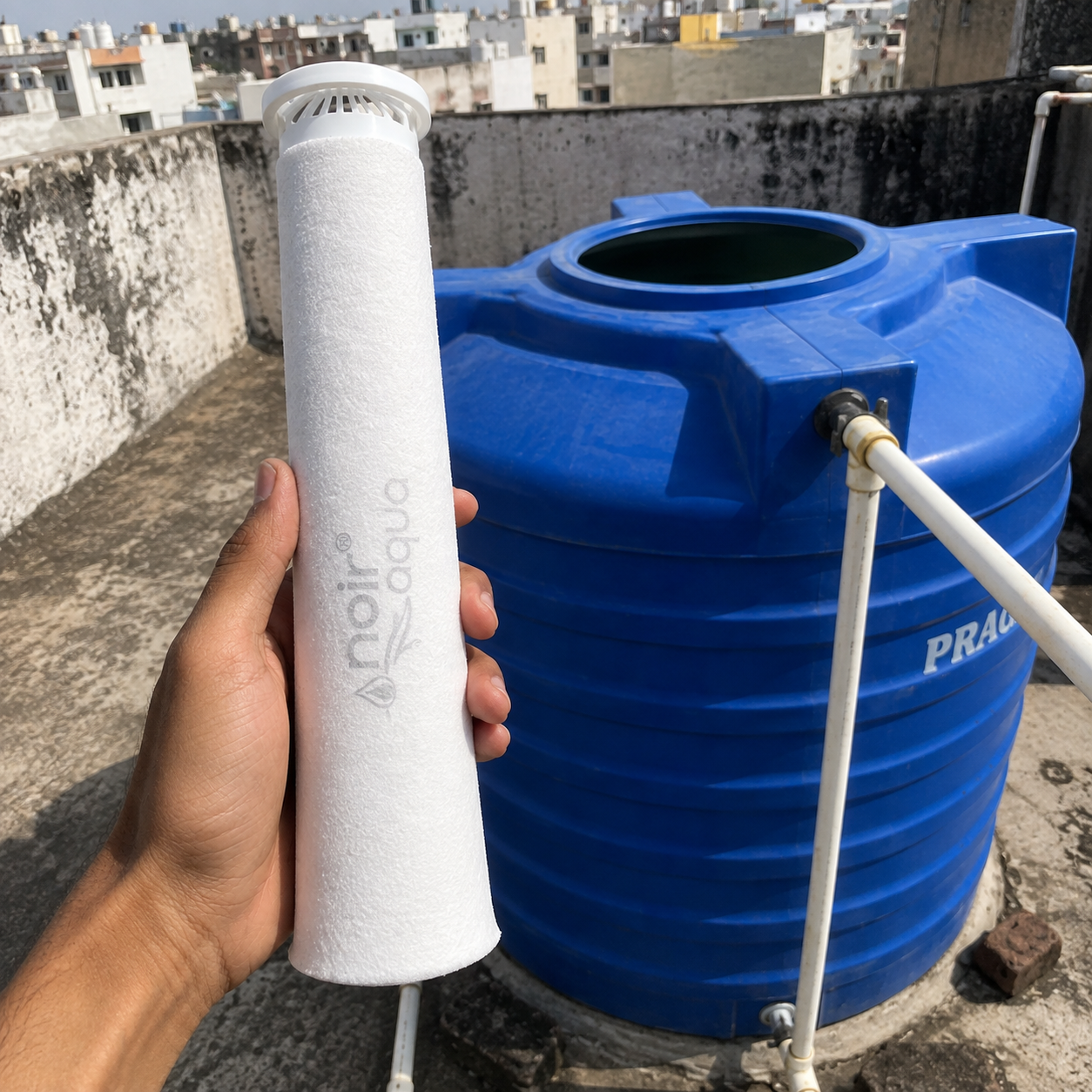
A 5-micron filter bag on the tank inlet does this. Water passes through a fine mesh on its way in, and sand, silt, mud and rust flakes stay in the bag instead of settling at the bottom of your tank. When the bag looks brown, you rinse it out and put it back.
This is what our 5-micron tank filter bag is for. It fits standard 20-inch Big Blue housings, so if your tank inlet already has one, it slots straight in.
What a sediment filter will not do
Be clear about this before you buy anything:
- It is not a drinking water purifier. It removes particles you can see. It does not remove bacteria, viruses or dissolved chemicals.
- It does not remove dissolved iron. Many Kerala wells, especially in the laterite midlands, have iron that is dissolved in the water and only turns orange after it meets air. A 5-micron bag catches rust flakes, but not iron that is still dissolved. We explain the difference in iron in Kerala well water.
- It does not replace well chlorination after flooding.
For drinking water, use a proper purifier (RO, UV or boiling) after the sediment stage. A sediment filter in front of a purifier also protects the purifier, because the purifier's own pre-filter clogs far less often. Our sediment filter vs RO guide goes through which one you need.
A monsoon checklist for a Kerala house
- Before June: clean the overhead tank, check the well parapet and apron, and fit a sediment filter on the tank inlet.
- During heavy rain: avoid running the motor while the well water is visibly cloudy, if you can wait a few hours for it to settle.
- Every week or two in the monsoon: rinse the filter bag. If it is brown within days, your well is taking in a lot of runoff and the parapet is worth a look.
- After flooding: chlorinate the well as advised by the health department, and clean the tank before using the water.
Muddy monsoon water is so common in Kerala that most people just put up with it. You do not have to. Most of the fix is keeping the well sealed and catching the silt at the tank inlet, and both are things you can do this weekend.