Kerala monsoon kitchen: keeping the sink corner dry when nothing ever dries
In a Kerala monsoon the sponge never dries, the soap dish turns slimy and the counter by the sink stays wet for days. Simple ways to keep that corner dry without drilling into your tiles.
fryingpan4 min read
From June to September, a Kerala kitchen never quite dries. The washed vessels on the rack stay damp, the cloth by the stove smells by evening, and the sponge sits in a small puddle beside the sink from one wash to the next. By the second week of rain, the soap dish has a slimy film and the sponge has that sour smell that no amount of rinsing fixes.
Short answer: a wet sponge and a damp sink corner are the perfect place for bacteria to grow, and the monsoon's humid air means nothing dries on its own. The fix is to get the sponge and soap up off the wet counter and somewhere water can drain away, then wring and replace the sponge more often during the rains.
Why the sink corner is the worst spot in the kitchen
A used kitchen sponge is one of the most bacteria-rich objects in a home. A study that analysed used kitchen sponges with DNA sequencing and microscopy found very large numbers of bacteria living inside them (Cardinale and colleagues, Scientific Reports, 2017). Bacteria need moisture, food scraps and time, and a sponge lying in a puddle by the sink gives them all three.
The Kerala monsoon makes it worse:
- Humid air slows drying. On a dry day a wrung-out sponge dries in a few hours. In continuous rain, it can stay damp until the next wash.
- Counters stay wet. Water splashed around the sink has nowhere to go, so the sponge and soap bottle sit in it.
- Kitchens are busy. Rice washing, fish cleaning and several rounds of vessels a day mean the sponge is almost never dry for long.
We explain the smell itself in more detail in why your kitchen sponge smells.
Get the sponge off the counter
The single biggest change is where the sponge lives between washes.
On the counter or in a closed soap dish: water pools under it, so the bottom stays soaked and the dish grows slime.
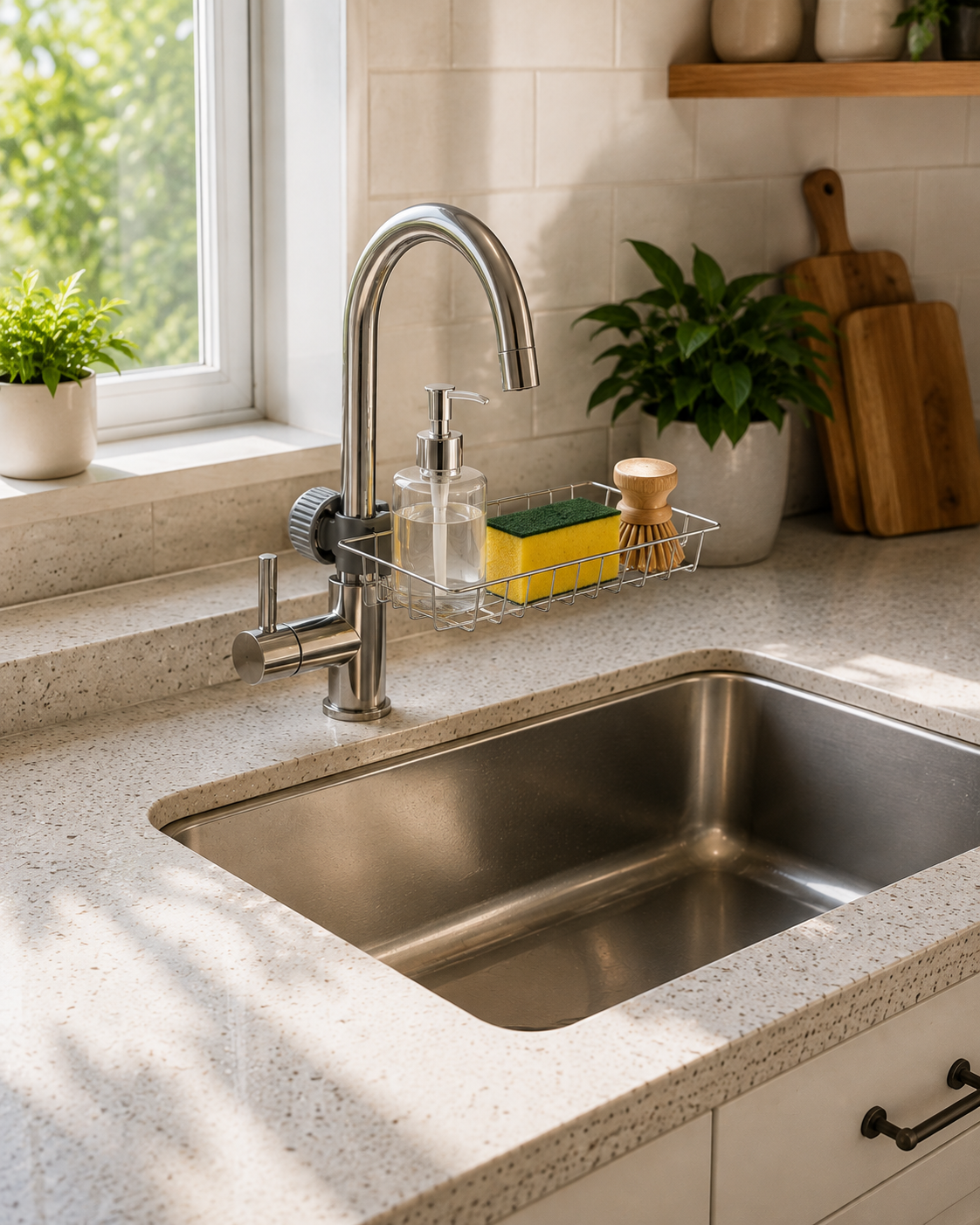
Hanging or in an open rack above the sink: water drips straight back into the sink, air reaches every side, and the counter stays dry.
Many Kerala kitchens have glazed tiles around the sink, and nobody wants to drill holes in them for a shelf. Suction cups slide down tiles, especially once the walls are damp. Adhesive hooks give up in the humidity.
That is why we sell a no-drill sink rack. It clamps onto the neck of a standard round kitchen tap with a hand-tightening wheel, so it needs no drilling, screws or glue. The open stainless steel wire basket holds the sponge, a dish brush and a pump soap bottle, and the water drains straight back into the sink. It will not fit square spouts or wall-mounted taps without a vertical neck, so check your tap shape first.
Monsoon habits that keep the sink corner fresh
- Wring the sponge hard after every use. Less water left in it means less time spent damp.
- Rinse food bits out. Rice grains and fish scraps trapped in the sponge feed the bacteria.
- Replace sponges more often in the rains. If it smells even after a rinse, it is time. Many households switch every week or two during the monsoon.
- Clean the soap bottle base and rack weekly. A quick wash with hot water and a little dish soap stops the slimy film from building up.
- Wipe the counter dry at night. The last wash of the day is the one that sits wet longest.
- Keep a fan or window open after cooking if you can, so the kitchen air moves.
A quick monsoon kitchen checklist
- Sponge, brush and soap stored above the sink, not beside it
- A stack of spare sponges for the rainy months
- Counter wiped dry at the end of the day
- Rack and soap bottle washed once a week
None of this needs a renovation. Get the wet things off the counter and let them drain, and the sink corner stops being the smelliest part of the kitchen, even in the middle of a Kerala monsoon.
If water is also giving you trouble this season, read why Kerala well water turns muddy in the monsoon.